|



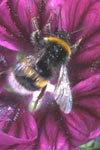
Bumblebees are likeable insects and there are many common attractive species. They are friendlier than honeybees and do not sting unless severely molested. Larger and furrier than honeybees, their deep buzzing work habits grace town and country gardens worldwide.
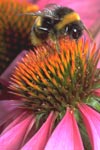
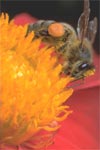
Most of the bumblebees we see in the garden are foraging workers, who’s only task is the collection of nectar and pollen to supply themselves and their colony members. They are probably the most important pollinators of garden plants and wildflowers in far northern latitudes because they are active at lower temperature and work longer days that most other insect pollinators, including honeybees.
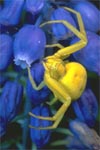
Crab spiders commonly wait for prey on flowers. They usually are well camouflaged and so presumably have a long evolutionary history as predators in flowers, but how do the spiders effect their pollinator prey? Do crab spiders limit pollinator visits? Are hovering-to-feed behavior, an exceptionally long tongue, and long legs in certain bee flies (Bombylius ), for example, adaptations to avoid predation by crab spiders?